A supervised, fully planned 22-day programme through China — half business immersion at the Canton Fair and the factory cities behind it, half real travel through Guangzhou, Shenzhen, Macau, and Hong Kong. You send your passport and payment. We handle the rest.
Half business immersion. Half real travel through China.
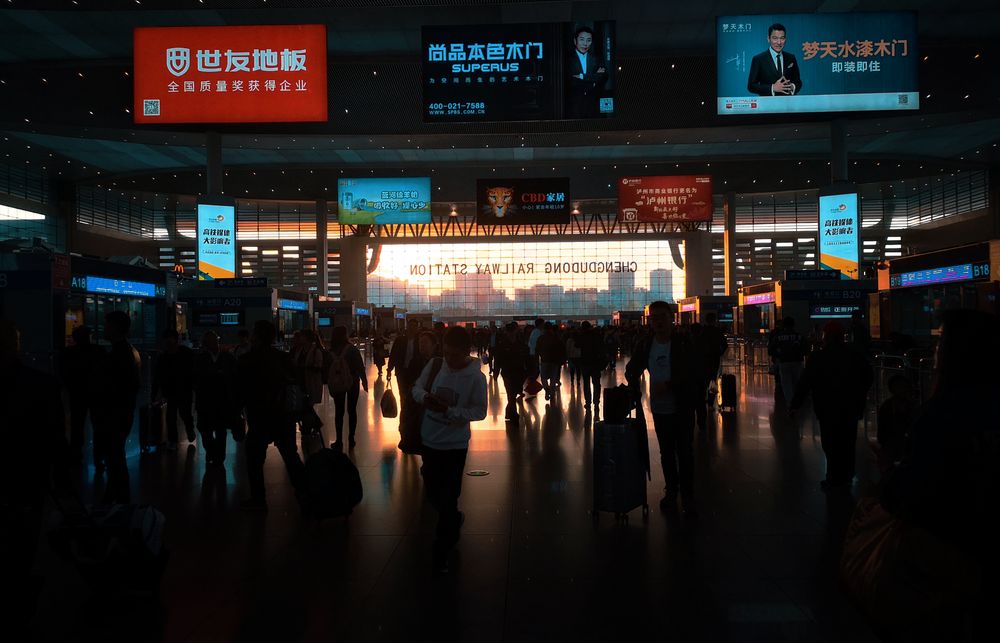
This is a 22-day, fully organised trip through 7 cities in China, built around the 140th Canton Fair — the world's largest sourcing event, split into 3 phases across electronics, home goods, and textiles. Roughly half the trip is spent on the Fair floor, in wholesale markets, and inside working factories, learning how products the whole world buys actually get made and sold. The other half is real travel — karst mountains, river gorges, colonial old towns, harbour skylines, and two of Asia's great cities as the finale. It is not a school trip and it is not a holiday. It's both, on purpose.
22
days in China, start to finish, one group, one itinerary
7
cities — trade floors, factory towns, mountains, and harbour cities
3
Canton Fair phases covered — most visitors only ever see one
1
thing you have to do — send your passport and payment
Flights, hotels, trains, entry passes, and a full-time crew on the ground — all handled. You show up at the airport.
七城
Seven real cities, not one showroom
Guangzhou, Foshan, Zhaoqing, Qingyuan, Shenzhen, Macau, Hong Kong — trade floors, factory towns, a UNESCO mountain, a glass bridge everyone's seen on Instagram, and two harbour skylines. One route, all of it.
三期
The Canton Fair — all 3 phases, explained
It's the world's largest sourcing event — where global buyers meet the factories that make everything they sell. Electronics, home & lifestyle, textiles: most visitors get one phase. You get all three, with manufacturer contacts in hand.
全包
One package. Everything handled.
Flights, visa, insurance, hotels, intercity trains and cabs, entry passes — booked and paid for as one package. Not just the visa. Every moving part.
在场
Run in person, not outsourced
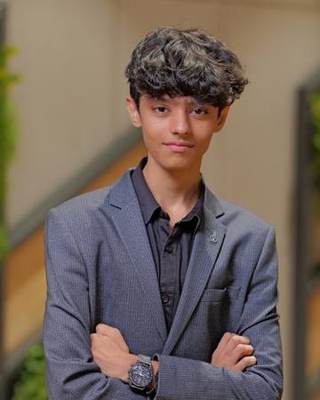
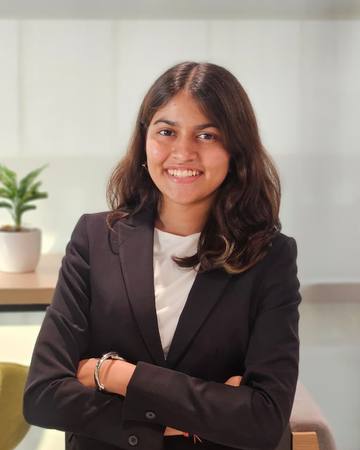
Aryaman Kapoor and Aanya Dangwal — the founders who built this route — are on the ground for all 22 days. Not a licensed tour operator standing in for them.
Most people read about the world's factory floor. This is for the ones who want to stand on it — face to face with the deals that stock the world's shelves.
The Canton Fair is the largest trade exhibition on earth, and this trip is built around all three of its phases this session. Between Fair days, the itinerary runs through the manufacturing belt that supplies it — Foshan, Zhaoqing, Qingyuan, Shenzhen — cities most visitors never see, because they aren't built for visitors. They're built for production.
It closes in Macau and Hong Kong, the financial hinge connecting everything you've just walked through to the rest of the world.
Trade days
Fair floor & wholesale markets
Mornings and afternoons on the Canton Fair floor or Guangzhou's wholesale districts, entry structured by category. Evenings run lighter — riverfront, city walks, cultural stops.
The viral days
Zhaoqing & Qingyuan — not your average business trip
Dinghu Mountain, a UNESCO Biosphere Reserve, and the Gulong Gorge glass bridge and mountain slide in Qingyuan — the exact spot behind half the China reels on your Instagram feed. Built into the route on purpose, not as an afterthought.
The finale
Shenzhen, Macau & Hong Kong
Huaqiangbei's electronics markets, Macau's colonial old town, Victoria Harbour, and — on Packages B and C — a day at Hong Kong Disneyland. The trip closes at its highest point, not its most exhausted.
01The anchor event
Three phases. One floor.
The 140th session of the China Import and Export Fair runs across three phases at the Fair Complex in Guangzhou. This programme is built around all three.
Fair Complex, Guangzhou
The Canton Fair isn't a trade show you visit — it's the trade show, full stop. Twice a year it turns Guangzhou into the largest sourcing floor on earth: tens of thousands of exhibitors, buyers from every country that imports anything, and three back-to-back phases covering electronics, home goods, and textiles. Most delegations catch one phase and one category. This programme is built to walk all three.
For a business or economics student, it's the closest thing to a live case study in how global supply chains actually move — pricing conversations, MOQ negotiations, and sourcing decisions happening in real time, on the floor, not in a textbook. For a founder or early operator, it's the fastest way to build a supplier network that would otherwise take years of cold outreach. And for anyone simply curious how the products on every shelf in the world get made, it's the most direct answer available.
Phase 1 · 15–19 Oct
Electronics & Machinery
Consumer electronics, appliances, vehicles & parts, hardware, lighting, new-energy equipment — the categories that fill a container ship.
On the floor 18–19 Oct · walk exhibitor booths, collect supplier contacts, sit in on live pricing & MOQ conversations
Phase 2 · 23–27 Oct
Home & Lifestyle
Houseware, gifts & premiums, home decor, building materials, furniture, machinery for the home — everything that fills a house, at export scale.
On the floor 25–27 Oct · faster and deeper this time — context from Phase 1 already built
Phase 3 · 31 Oct–4 Nov
Textiles & Consumer
Apparel, footwear, bags & cases, textiles & fabrics, food, health & medical products — where the trip's supplier relationships get confirmed.
On the floor 31 Oct–2 Nov · final supplier meetings, sample collection, a complete picture of global trade start to finish
Phase 1 is about absorbing scale. By Phase 2, with context already built, you move faster and see deeper. Phase 3 is where booth behaviour, pricing and supplier relationships finally read as a complete picture. Most people see the Fair once, if ever — this programme gives you all three phases in one trip. Everything happening around the Fair — the wholesale markets, the factory floors, the city itself — is broken out city by city below.
02Where you'll actually be
The Canton Fair is the anchor. China is the point.
Seven cities, each doing something different — trade floors, factory towns, mountain quiet, and two of the world's great harbour skylines.
Swipe to see all 7 cities→
Base city · Blocks 1 & 2
Guangzhou
Southern China's trade capital for two thousand years, and the Fair's home. Pearl River waterfront, Shamian Island's colonial streets, and some of the country's best Cantonese food between fair days.
See what is inside→
01
Canton Fair Complex, Pazhou
All three phases, eight days on the floor. The largest trade exhibition on earth, and the anchor the entire trip is built around.
02
Baima & the streetwear towers
Multi-storey wholesale towers where global fashion actually starts — before the brand name and the markup get added. You watch a trend become a product, and see pricing set floor by floor.
03
The replica & luxury goods market
Watches, bags, shoes, and the entire parallel economy that has grown up beside the real one. We go to look, not to buy: it is the clearest field lesson available in how branding, margin and counterfeiting actually interact in a supply chain.
04
Yide Road — toys & stationery
A completely different category of business from electronics or apparel: high turnover, low unit price, enormous volume. Seeing it next to the Fair floor shows how differently a consumer-goods category operates.
05
Zhongda fabric & trims markets
Where every garment anyone has ever owned technically began. Rooms of raw textile, trims and buttons — the layer of the supply chain most people never think about, let alone stand inside.
06
Party Pier
An open-air nightlife strip on the Pearl River — bars, live music, a genuinely international crowd. In the schedule on purpose, and where Halloween happens on 31 October.
07
Pearl River night cruise
Two hours through a skyline built to be looked at. First night of the trip, before the Fair starts.
08
Chen Clan Ancestral Hall
The finest surviving Lingnan architecture in the province — carved timber, ceramic ridge friezes, and a genuine change of pace from a trade floor.
09
Canton Tower Optional
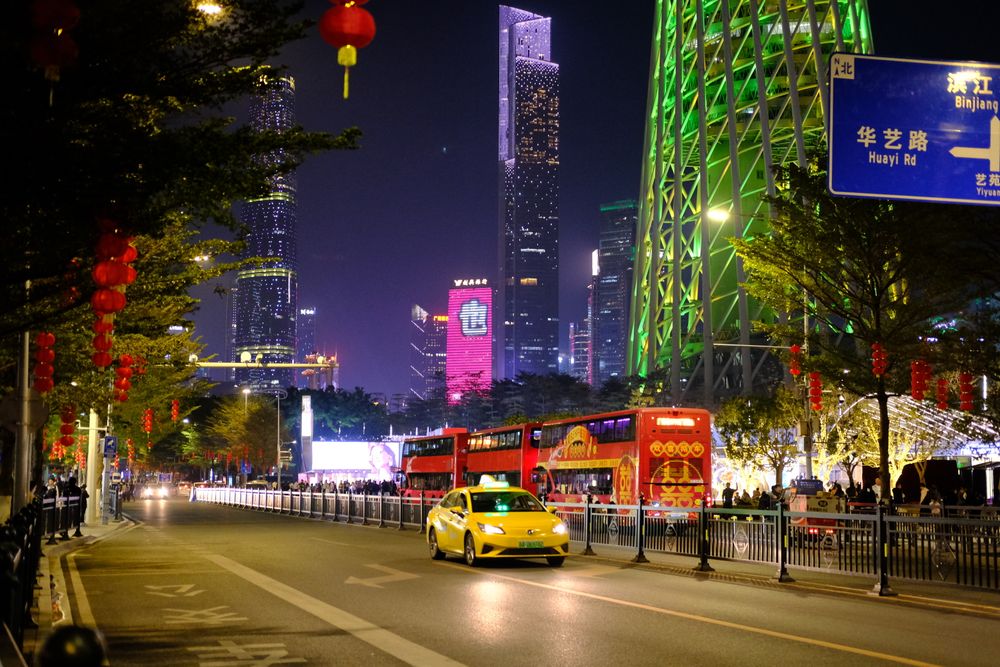
600 metres, with the Sky Walk and the drop ride at the top. The last Guangzhou night of the trip.
10
Beijing Road & Guangzhou Zoo
The pedestrian retail spine, and the pandas — for the lighter afternoons between Fair days.
Block 1
Foshan
Ceramics and furniture manufacturing at serious scale, plus the martial-arts heritage that produced Wing Chun and Bruce Lee's lineage. Lingnan temples and heritage streets between factory visits.
See what is inside→
01
Foshan Ancestral Temple (Zumiao)
Nine hundred years old, and the spiritual centre of Lingnan culture — also the martial-arts lineage that produced Wing Chun and, eventually, Bruce Lee.
02
Lingnan Tiandi
Restored heritage streets in grey brick and timber, folded into a modern retail district. Lunch stop and the cultural half of the day.
03
Louvre Furniture Mall, Lecong
A furniture ecosystem at a scale that does not photograph well because it will not fit in a frame. Showroom after showroom of export-grade production, sold wholesale.
04
Factory floor visits
Ceramics and furniture manufacturing at serious scale — the production side of what you have just watched being sold. Where “made in China” stops being an abstraction and becomes a process you have stood inside.
05
Shunde waterfront
Night market and riverside food in the district widely argued to be the best place to eat in all of Guangdong.
Block 1 · UNESCO site
Zhaoqing
Star Lake, the Seven Star Crags, and Dinghu Mountain — a UNESCO Biosphere Reserve and one of the most naturally striking places in Guangdong. The itinerary's first real exhale after the fair floor.
See what is inside→
01
Seven Star Crags
Seven karst peaks rising out of Star Lake, arranged — the story goes — like the Big Dipper fallen to earth. Boardwalks, caves and water on all sides.
02
Star Lake night loop
Lit end to end after dark. Most of the group ends up walking it twice, which is the entire point of putting it here.
03
Dinghu Mountain
A UNESCO Biosphere Reserve on the doorstep — Qingyun Temple, Feishui Pool, and forest protected continuously for four hundred years.
04
Lakeside stay
We stay on the water itself rather than in the city, so the evening is the reward rather than a transfer.
05
Cycling & ATV, lake perimeter
The flat loop around Star Lake, on wheels, in the last light.
Block 1 · The viral one
Qingyuan
Home to the Gulong Gorge glass bridge and mountain slide — the exact spot behind a huge share of the China travel reels on Instagram right now. Forested, cooler, and built in as a recovery block before Phase 2.
See what is inside→
01
Gulong Gorge
Waterfalls, cliff walkways and a canyon that runs considerably deeper than it looks from the rim. The largest waterfall group in the province.
02
The glass bridge Optional
The cantilevered glass span over the gorge that put Qingyuan on every China travel reel on the internet. Available to whoever wants it.
03
High-adrenaline zone Optional
Cliff karts, zip runs and the rest of the gorge adventure set-up, priced and taken separately.
04
Hot springs
Natural mineral springs at the resort, open into the night. The single most-appreciated hour of the entire trip, every edition.
05
Sunrise viewpoint
Early start, ridge walk, and the valley filling with light. Optional in practice — nobody is dragged out of bed.
Block 2
Shenzhen
A fishing village forty years ago, now China's tech and hardware capital. Huaqiangbei's electronics markets, a skyline built almost entirely since 2000, and the clearest picture of how fast the region moves.
See what is inside→
01
Huaqiangbei electronics market
A full day. Floor after floor of components, boards, tools and finished product — the physical layer underneath every device anyone owns.
02
Yunhai Island, at sunrise
We leave before dawn. The sun comes up over the South China Sea, the founders are on the decks, and the whole group is on a cliff edge at six in the morning. Every edition.
03
OCT Loft
A decommissioned industrial estate turned design and gallery district — the creative counterweight to three days of hardware.
04
Sea World, Shekou
An international waterfront district built around a decommissioned ocean liner. Where the expat half of Shenzhen actually eats.
05
Futian CBD & Shenzhen Bay
The financial core on foot, then the Talent Park waterfront as the skyline comes on across the bay.
06
Ping An Finance Center — Free Sky Optional
116 floors up, and the entire city at once. Taken separately for anyone who wants it.
07
MixC Luohu & Futian
Retail at a scale that is itself worth studying, and where the group tends to lose an evening.
Block 3
Macau
Portuguese colonial streets folded into Chinese heritage, a UNESCO-listed historic centre, and a pace that's deliberately the opposite of the Fair floor. Also, the best egg tarts on the route.
See what is inside→
01
Senado Square & the historic centre
Portuguese wave-pattern paving, pastel facades and a UNESCO-listed core that reads as southern Europe right up until you look up.
02
Ruins of St. Paul's
The stone facade of a 17th-century Jesuit church, and the most photographed object in Macau for good reason.
03
Taipa Village
Narrow lanes, egg tart queues and the older, quieter Macau that most day-trippers skip entirely.
04
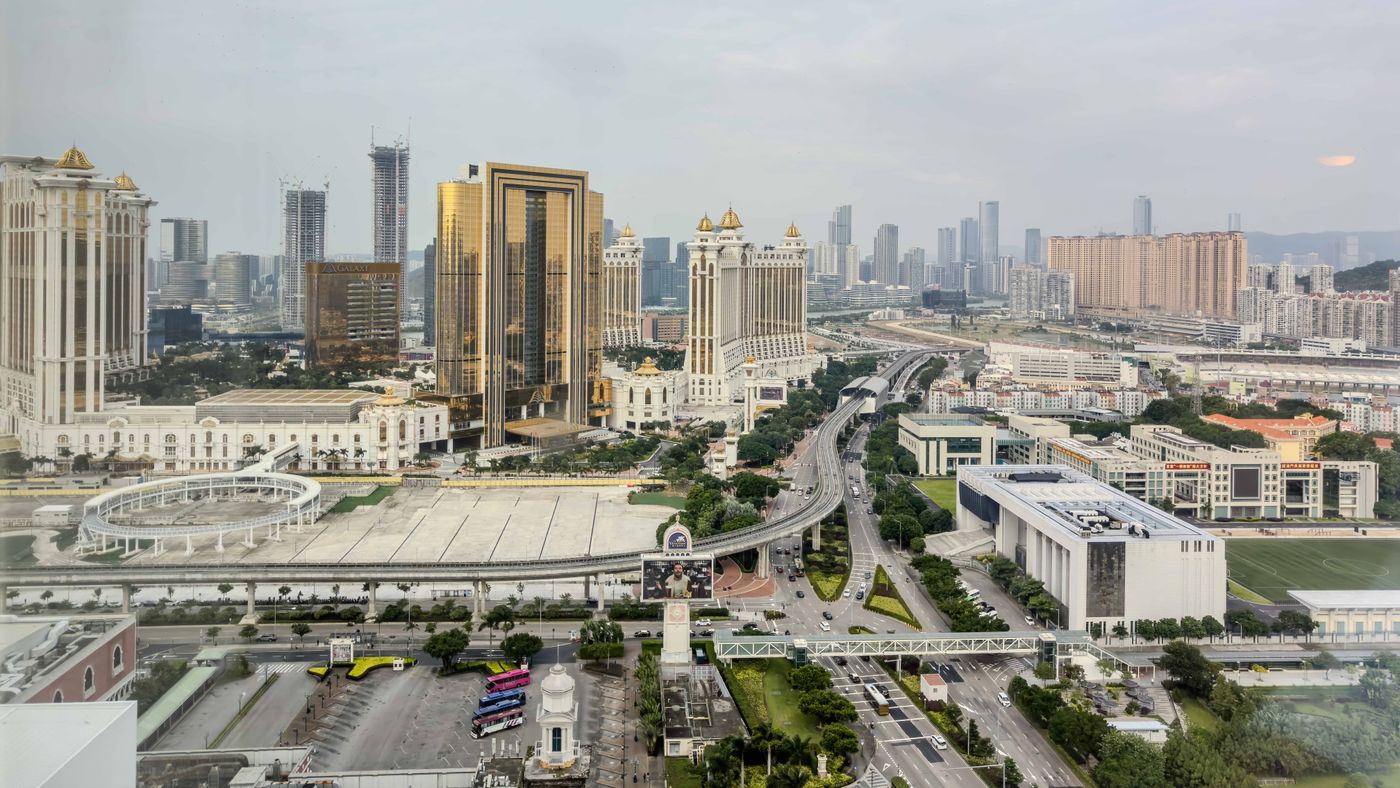
The Cotai Strip
The Venetian, the Parisian, the Londoner, Galaxy — indoor canals, an Eiffel Tower and a scale of built environment that has to be walked to be believed.
05
Wynn Palace Performance Lake
A choreographed fountain, light and music show over the lake, free, and running every twenty minutes after dark.
06
Macau Tower Optional
338 metres, at sunset, with the whole peninsula and the Pearl River delta laid out.
Block 3 · Finale
Hong Kong
The trip's closing chapter — Victoria Harbour, a day at Disneyland, and one of the world's great financial districts as the natural endpoint of everything the route has built toward.
See what is inside→
01
Hong Kong Disneyland
A full day, every land, the parade, and fireworks over the castle to close. Tickets included. Twenty days of trade floors and factories, and it ends on a rollercoaster — deliberately.
02
Victoria Peak
The classic view, at sunset, over one of the two or three best harbour skylines on earth.
03
Star Ferry
Six minutes across Victoria Harbour on a boat that has been running the same crossing since 1888. Costs almost nothing and is worth more than most things that do not.
04
Tsim Sha Tsui & Avenue of Stars
The Kowloon waterfront, looking back at the island, with the skyline doing its light show at eight.
05
Central & the Mid-Levels escalators
The financial district on foot, and the longest outdoor covered escalator system in the world running up the hillside through it.
06
Lan Kwai Fong
The last proper night of the trip, in the district built for exactly that.
03The route
Three blocks. Join for two, or all three.
The route runs in continuous blocks — no single-day add-ons, no rejoining mid-trip.
Arrival, Fair Phase 1, and the manufacturing belt west of the Pearl River.
BLOCK 2 · 9 NIGHTS
Guangzhou → Shenzhen → Guangzhou
广州 · 深圳
25 Oct–2 Nov
Fair Phases 2 and 3, bracketing a run through Shenzhen.
BLOCK 3 · 4 NIGHTS
Guangzhou → Macau → Hong Kong
澳门 · 香港
3–7 Nov
Macau, then Hong Kong — including a full day at Disneyland — before flying home on 7 November.
04Every day, accounted for
Twenty-two days, one at a time
Three blocks. Eight days inside the Canton Fair across all three phases, and fourteen days of everything that makes those eight days mean something.
打
Tap any block below to open it — every single day is written out inside, hour by hour, so you can see exactly how your twenty-two days actually run.
01
17 Oct · Sat
Guangzhou
Landing, and the river at night
Wheels down at Baiyun in the afternoon, transfer into the city, check in, and a proper reset window — nobody starts a 22-day trip on no sleep. In the evening, the Pearl River cruise: two hours through a skyline that was built to be looked at.
Included
02
18 Oct · Sun
Guangzhou · Canton Fair
Phase 1 — the industrial engine
Badges first, then the floor. Electronics, machinery, heavy industry, laid out across halls it takes a day just to walk. We work the Fair through the middle of the day, then head out while the wholesale districts are still trading. Evening on Beijing Road.
Included
03
19 Oct · Mon
Guangzhou · Canton Fair
Phase 1, second pass — and Baima
The second visit is where it starts becoming readable: you know the layout, you know which categories matter to you, and you move with intent. Out by early afternoon for Baima — the market shuts at five, so we go while it is alive, not after.
Included
04
20 Oct · Tue
Foshan
The industrial soul, in one clean line
Early transfer. Foshan Ancestral Temple and the Lingnan Tiandi heritage streets in the morning, then south to Lecong for the Louvre Furniture Mall — a furniture ecosystem that supplies most of the world, at a scale that does not photograph well because it will not fit in a frame. Night at the Shunde waterfront.
Included
05
21 Oct · Wed
Zhaoqing
Limestone, and the trip exhales
Out of Foshan by eight, into Zhaoqing by late morning. Seven Star Crags — karst peaks rising straight out of flat water. We stay on the lake itself. The night loop around Star Lake is lit end to end, and most of the group ends up walking it twice.
Included
06
22 Oct · Thu
Zhaoqing
Dinghu Mountain
A UNESCO Biosphere Reserve on the doorstep — Qingyun Temple, Feishui Pool, and forest that has been protected for four hundred years. Electric shuttles run the interior. Back for an evening of cycling and ATVs around the lake perimeter.
Included
07
23 Oct · Fri
Qingyuan
Gorge country, and hot springs
Transfer by road through the hills. Check in, walk the scenic ridge, watch the sun go down over the gorge, and end the day in the hot springs. This is the deliberate low point in the intensity curve — the group needs it before the Fair starts again.
Included
08
24 Oct · Sat
Qingyuan
Sunrise, and the gorge
Up for the sunrise viewpoint, then Gulong Gorge — waterfalls, cliff walks, and a canyon that runs deeper than it looks from the rim. The glass bridge and the high-adrenaline zone sit alongside, for whoever wants them. Final night at the resort.
IncludedOptional add-on
Block 1 ends herePackages A and C only. Package B joins tomorrow morning in Guangzhou.
09
25 Oct · Sun
Qingyuan → Guangzhou
Phase 2 begins
Early checkout and back down to Guangzhou. Straight into Canton Fair Phase 2 for the afternoon — consumer goods, homeware, gifts, toys. A completely different rhythm to Phase 1, and the contrast is the point.
Included
Package B starts herePackage B participants arrive in Guangzhou today and join the group for Phase 2.
10
26 Oct · Mon
Guangzhou · Canton Fair
Phase 2 — targeted
Fair through the morning with a shortlist rather than a wander. Out by early afternoon into the Yide Road toy and stationery wholesale district — high turnover, low price, enormous volume, and a supply chain that behaves nothing like electronics.
Included
11
27 Oct · Tue
Guangzhou · Canton Fair
Phase 2 closes — textiles, then the Pier
Last morning of Phase 2: final walkthroughs, quotations, samples. Afternoon in the fabric and trims markets around Zhongda, where every garment anyone has ever owned technically began. Party Pier in the evening.
Included
12
28 Oct · Wed
Shenzhen
A fishing village, forty years later
High-speed rail south. Futian CBD on foot, then Shenzhen Bay Talent Park as the skyline comes on across the water. The Ping An Finance Center observation deck at 116 floors is there for anyone who wants the whole city at once.
IncludedOptional add-on
13
29 Oct · Thu
Shenzhen · Yunhai Island
Sunrise, with a set running
We leave before dawn. The sun comes up over the South China Sea, the founders are on the decks, and the whole group is standing on a cliff edge at six in the morning wondering how this became normal. Back for rest, then OCT Loft in the afternoon and Sea World, Shekou at night.
Included
14
30 Oct · Fri
Shenzhen · Huaqiangbei
The largest electronics market on earth
A full day inside Huaqiangbei. Floor after floor of components, boards, tools and finished product — the physical layer underneath every device anyone owns. Evening across the MixC malls.
Included
15
31 Oct · Sat
Guangzhou · Canton Fair
Phase 3 — and Halloween
Back to Guangzhou and into Phase 3: textiles, garments, footwear, accessories. Then the trip runs straight into Halloween, on a Saturday night, at Party Pier — costumes, an international crowd, and the riverfront going properly loud. It happened last edition. It is happening again.
Included
16
01 Nov · Sun
Guangzhou
Phase 3, then Lingnan
Fair through the morning. Afternoon at the Chen Clan Ancestral Hall — the finest surviving Lingnan architecture in the province, and a genuine change of pace from a trade floor. Guangzhou Zoo and the pandas for anyone who wants the lighter afternoon.
Included
17
02 Nov · Mon
Guangzhou
Phase 3 closes — and the city from 600 metres
Final Fair morning: confirmations, samples, and the supplier relationships that outlast the trip. The last Guangzhou night belongs to Canton Tower — 600 metres up, with the Sky Walk and the drop ride for anyone with the nerve. Go-karting after, for whoever is still standing.
IncludedOptional add-on
Block 2 ends herePackage A finishes tonight and departs on 3 November. Packages B and C continue to Macau.
18
03 Nov · Tue
Macau
Portugal, five hundred years later
Transfer and the border crossing take the first half of the day — we plan for that rather than pretend otherwise. Then Senado Square, the Ruins of St. Paul's, and the cobbled UNESCO core, which looks like southern Europe right up until you look up.
Included
19
04 Nov · Wed
Macau
Taipa, then the Cotai Strip
Taipa Village in the morning — egg tarts, narrow lanes, the older Macau. Then the Cotai Strip: the Venetian, the Parisian, the Londoner, Galaxy, and the Wynn Palace fountain show after dark. Macau Tower at sunset for the whole peninsula at once.
IncludedOptional add-on
20
05 Nov · Thu
Hong Kong
The city announces itself
Morning ferry across. Central and the Mid-Levels escalators, the Star Ferry over Victoria Harbour, Tsim Sha Tsui and the Avenue of Stars, then Victoria Peak as the light goes. Lan Kwai Fong after dark.
Included
21
06 Nov · Fri
Hong Kong
Disneyland, the whole day
A full day at Hong Kong Disneyland — every land, the parade, and fireworks over the castle to close it out. Tickets included. Twenty days of trade floors, factories, and border crossings, and the trip ends on a rollercoaster. That is deliberate.
Included
22
07 Nov · Sat
Hong Kong → Delhi
Home, with a day to spare
A last hour on the harbour, then the airport and the flight back to Delhi. You land the night before Diwali — unpacked, home, and with a completely different set of things to talk about at the table.
Included
Timings shift with traffic, weather, and how the group is actually doing on the day — that is judgement, not vagueness. What does not shift: every Canton Fair day, every city, and every included entry listed above. Items marked optional add-on are paid separately on the day, so nobody subsidises an activity they did not want.
05Where you stay
Good rooms, in the right part of every city
Every property is chosen against one framework, applied without exception, in every city on the route — safe, central, and comfortable, not the cheapest bed that fits the budget.
Twin-sharing is standard across the trip — want a single room instead? Just get in touch — single rooms are available at an additional charge.
24-hour CCTV surveillance at every property, in every city, no exceptions.
3–4 star or premium-equivalent hotels, always in genuinely good, well-located areas — never on the outskirts.
Walking distance to convenience stores in every city, so food and essentials are never a problem late at night.
City
Tentative property
Selected for
Guangzhou
Confirming — Pazhou / city centre
City centre, walking proximity to the Fair Complex
Foshan
Confirming — Lingnan Tiandi area
Lingnan heritage district, close to the ceramics & furniture markets
Zhaoqing
White Swan Guest House, Star Lake
Star Lake lakefront, minutes from Seven Star Crags
Qingyuan
Confirming — gorge resort with hot springs
Gulong Gorge nature district, built around recovery
Shenzhen
Confirming — MixC / Futian
MixC district, between the electronics markets and the bay
Macau
Confirming — central Macau
Central Macau, walking distance to the Historic Centre
Hong Kong
Confirming — Kowloon harbourside
Kowloon / city centre, on the harbour side
Every property falls within an internationally rated 3–4 star or premium-equivalent category, twin-sharing as standard, booked as a block for the whole cohort — never split across properties mid-city. Named properties are confirmed closer to departure as rates lock in; every one is held to this exact standard, no exceptions.
06Choose your package
One all-inclusive price. No hidden line items.
Every package is a continuous run of the route above.
Group of 4 — flat 10% off, two twin rooms filled evenly
Package A
The Fair Run
Blocks 1 + 2 · the trade programme, stripped back — all three Fair phases at the lowest entry price on the table
Full Edge — Early Bird₹2,60,000Filled before the cohort opened
Sold out
Group-of-4 pricing applies to a party of exactly four booking the same package together — two rooms, evenly filled.
07The fine print, up front
What's in the fare
Included
Return flights, Delhi ↔ China — whole cohort ticketed as one block
Chinese visa, backed by an official invitation letter arranged through the programme
Comprehensive travel insurance, full 22-day window
All accommodation, twin-sharing
All intercity transport within the itinerary
Canton Fair registration, all phases attended
Airport transfers, arrival & departure
Attractions allowance (zoo, river cruise, and similar entries)
Hong Kong Disneyland ticket (Packages B and C)
Not included
Meals
In-city transport (metro, local cabs)
Personal shopping & sourcing samples
Local SIM / eSIM & connectivity
Anything outside the written itinerary
08How it actually runs
Every leg of the journey, spelled out
Flights, ground transport, food, and cover — the operational detail behind the itinerary.
Flights
Outbound: Delhi → Guangzhou on a reputed international carrier, one layover en route
Return leg lands in Delhi; onward domestic connections can be arranged at additional cost
Intercity travel
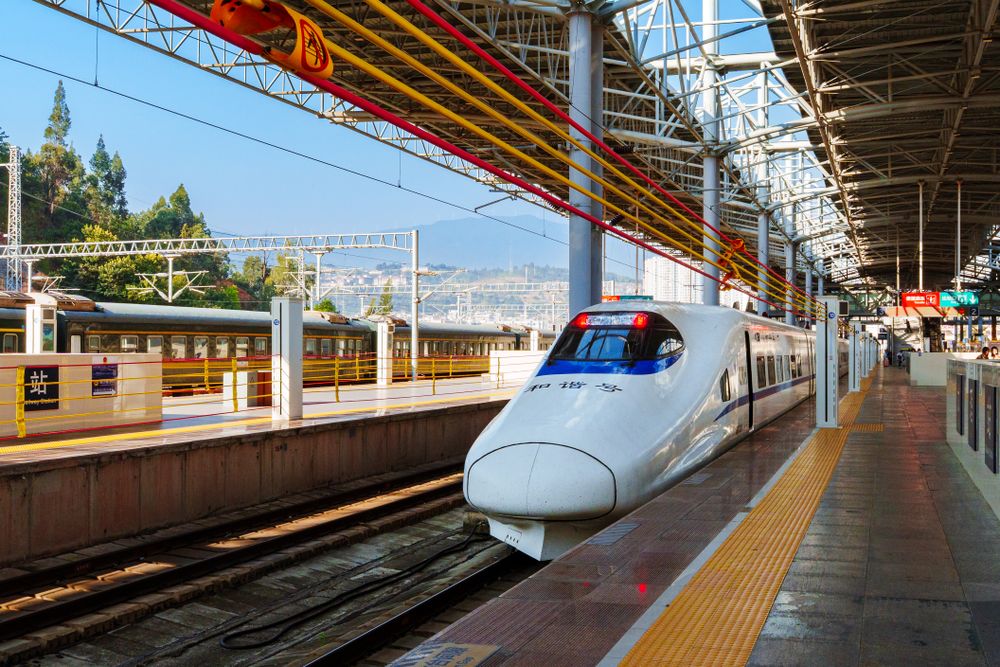
Every city-to-city leg on the route runs by high-speed rail or chartered cab, whichever the leg calls for
Booked and paid for the whole cohort as one block — nothing to arrange yourself
Included in every package, no separate line item
In-city transport
Metro, local cabs, and rides within a single city are not included in the package price
Where a cab is shared point-to-point inside one city, the fare is split evenly among whoever's in it
This is separate from intercity transport, which is always covered
Food
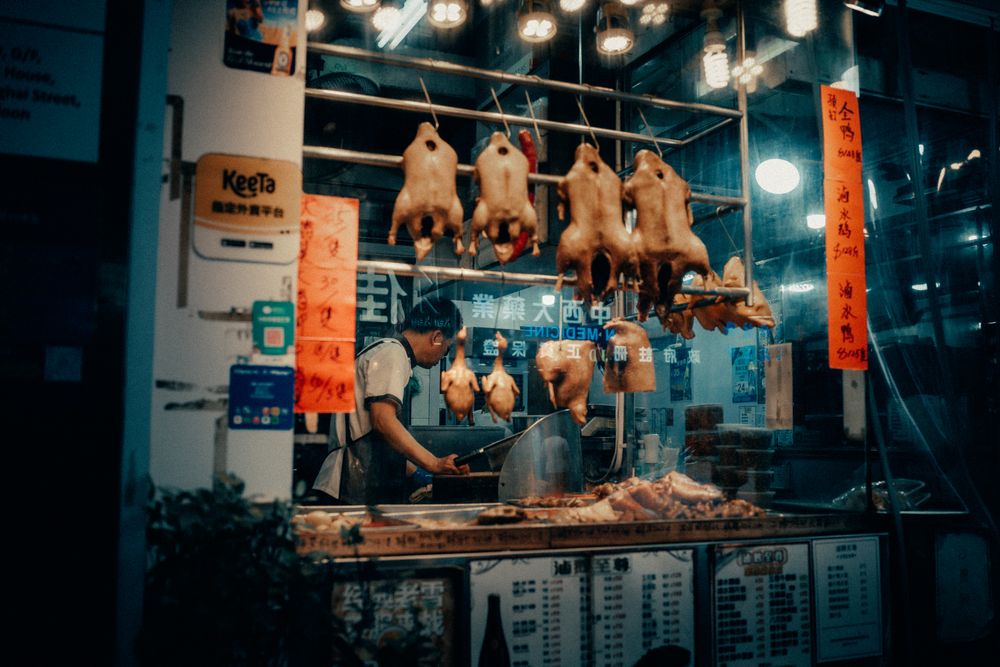
Meals aren't included — China, Macau, and Hong Kong run some of the most diverse food scenes anywhere, and convenience stores stay open 24 hours in every city on the route
Vegetarian options exist everywhere but can thin out in smaller spots — worth carrying light backup (instant noodles, packaged snacks) for the trade-heavy days
Travel insurance
Tata AIG premium travel insurance, included in every package for the full 22-day window
Covers overseas medical care and emergency hospitalisation; the founders also carry an on-ground medical kit for the whole trip
09Payment
One payment. Full and final.
✓
If your visa is rejected, you get your money back — less the ₹15,000 visa fee
Your seat is secured with a single, one-time payment covering your full package price — no staggered deadlines, no instalments to track. Visa documents are submitted once, to us, and processed centrally for the whole cohort.
Every participant's payment includes a fixed ₹15,000 visa processing fee. This covers the actual cost of applying — it's charged once, applies to everyone, and is non-refundable regardless of outcome, whether your visa is approved or rejected.
If your visa is rejected: your passport is returned to you, and your entire payment is refunded minus that same ₹15,000 — nothing more is deducted. If it's approved, the ₹15,000 simply stays part of what you already paid for your seat.
In short — visa rejected: passport back, full refund less ₹15,000. Visa approved: nothing changes, you're already booked.
10Who's running this
Two people. On the ground. Every single day.
This isn't run by a travel agency you'll never meet. It's built and personally led, start to finish, by the two founders below — the people who designed this exact route and will be walking it alongside you.
3rd
Edition — run twice already, in under a year
138th & 139th
Canton Fair sessions already covered
2
Founders on the ground the full trip, every edition
The Canton Fair runs twice a year — this is the 3rd edition of this exact programme in under twelve months. We've already run it through the 138th and 139th sessions; the 140th is next, because if we don't run it, nobody else will. Built and led personally by Aryaman Kapoor and Aanya Dangwal, both on the ground for the full trip this edition — not delegated to a tour operator, and not run remotely.
Aryaman Kapoor
Founder
Entrepreneur and business strategist with a track record of building and executing complex, multi-market operations from the ground up. Conceived and personally led the first edition of this programme in 2025 — a 21-day Canton Fair immersion spanning multiple Chinese cities — and has since refined it into a rigorously planned flagship trip, now in its third edition.
Aanya Dangwal
Co-founder
Business strategist known for precision under pressure and an exacting eye for detail across high-stakes, multi-party operations. A core architect of this programme since its inception, bringing the discipline that keeps a three-week, multi-city international itinerary running exactly as promised.
+Not on any itinerary, but it happens
The unofficial part of the trip
Nobody puts this on a brochure. We're putting it here anyway.
Yunhai Island, Shenzhen · Sunrise
A DJ set, live, by the founders
Both founders DJ, and the equipment is coming with us. We leave before dawn for Yunhai Island and the sun comes up over the South China Sea with a set running — sound system, open sky, the whole group. Not scheduled to the minute. It happens every edition.
Home by 7 Nov · Diwali
Back just in time for Diwali
We land in Delhi on 7 November. Diwali is the 8th. That timing wasn't an accident — you get the entire trip and you are still home, unpacked, with your family, for the one night of the year you'd actually regret missing.
While we're in China · Halloween
Halloween at Party Pier
The trip runs straight through Halloween, and last edition the group went all out at Party Pier — costumes, an international crowd, a proper party on the Guangzhou riverfront. It's happening again.
Somewhere around day twelve
The suppliers, the pricing, the booth patterns stop being noise and start being readable. Most people visit the Canton Fair once and never get past overwhelmed. You'll have walked two of the three phases by then — and you'll notice you're not lost in it anymore. You're reading it.
That's the actual return on twenty-two days. Not a certificate. Not a deck. Direct, working exposure to how global trade runs — the kind you can't get from a case study.
11Questions
Everything you'd ask before paying
What happens if my visa is rejected?
You're refunded your full payment minus ₹15,000, which covers the actual cost of visa procurement. Your passport is returned to you at the same time. No further bookings are made on your behalf until your visa is confirmed.
Can I join for just part of the trip?
Yes — that's what the three packages are for. You can't join for a single isolated block or leave and rejoin mid-trip, but Packages A and B both give you a continuous portion of the full route.
Who is this actually for?
People who want direct, working exposure to global trade and manufacturing at scale — students, early founders, and anyone building something that touches sourcing, supply chains, or import/export. It's a working trip, not a sightseeing tour.
How does payment actually work?
One payment, in full, secures your seat and begins visa processing immediately. There's no second or third instalment to remember later.
What isn't included in the price?
Meals, in-city transport such as the metro or local cabs, personal shopping, and connectivity (SIM/eSIM). Everything else on the itinerary — flights, visa, insurance, accommodation, intercity transport, and the listed attractions — is included.
Is a group discount available?
Yes — a party of exactly four people booking the same package together gets a flat 10% off the combined price, reflecting two twin rooms filled evenly.
What do I need to set up before departure?
Alipay for digital payments across the mainland, a ride-hailing app for in-city transport, and a VPN for connectivity — we send full setup guidance ahead of departure so you land already sorted.
What happens if someone needs medical attention on the trip?
The itinerary is deliberately built with balanced intensity and recovery blocks, and the founders carry an on-ground medical kit for the full 22 days. Your travel insurance covers overseas medical care and emergency hospitalisation on top of that.
12Last step
Reserve a seat
Fill this in and it opens a message to us directly — nothing you enter here is stored or visible to anyone else.